

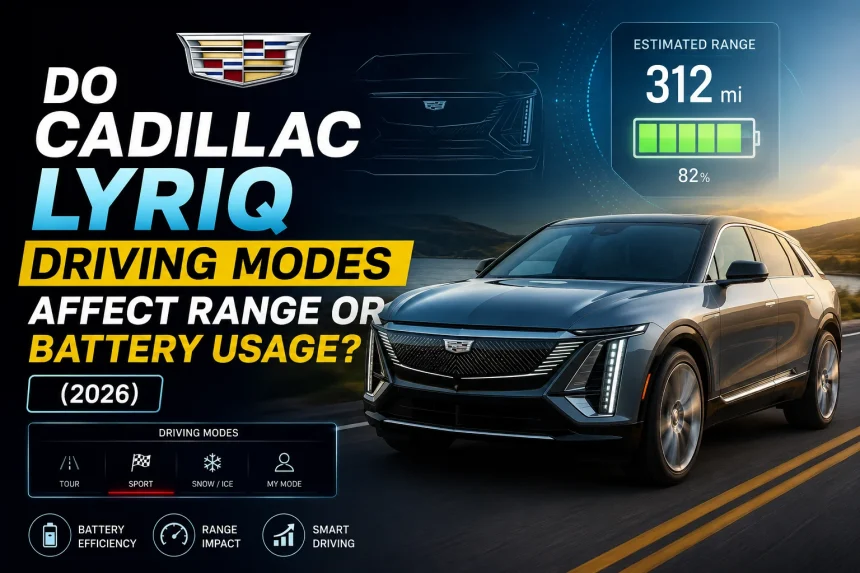
If you own or are considering a Cadillac LYRIQ, you may wonder whether switching between its driving modes changes battery consumption or the number of miles you can travel on a charge. It’s a reasonable question, especially with an electric SUV where efficiency directly affects trip planning.
The LYRIQ offers selectable driving modes that change aspects of the vehicle’s response, traction, and overall driving character. However, these modes do not normally create different battery capacities or separate EPA-rated range figures. They can influence real-world energy use indirectly, particularly when a mode changes how aggressively the vehicle accelerates or manages traction.
Read Also: Snapchat Planets
In this guide, we’ll look at Tour, Sport, Snow/Ice, and My Mode, explain what each setting is designed to do, and discuss the factors that usually have the biggest impact on LYRIQ range. Your speed, temperature, terrain, climate control, and driving habits can matter just as much, and often more, than the mode you select.
Quick Answer: Do LYRIQ Driving Modes Change Range?
Cadillac LYRIQ driving modes can affect real-world battery consumption, but they generally do not have separate fixed range ratings or different physical battery capacities. Tour, Sport, Snow/Ice, and My Mode mainly change the vehicle’s driving characteristics and traction behavior. Actual range depends heavily on speed, acceleration, temperature, terrain, HVAC use, and road conditions.
At a Glance
- Tour: Balanced setting for everyday driving.
- Sport: Sharper response and stronger performance feel.
- Snow/Ice: Designed to improve control on slippery roads.
- My Mode: Allows supported settings to be customized.
- Battery capacity: The selected mode does not physically change the battery.
- Real-world range: Can vary substantially with driving conditions.
So, if maximum range is your goal, simply selecting one mode is not enough. How you drive the LYRIQ usually matters more.
Understanding Cadillac LYRIQ Driving Modes
The Cadillac LYRIQ uses selectable modes to give drivers different driving characteristics. These settings should not be thought of as separate battery programs with their own official range ratings.
Instead, they influence how the vehicle responds to accelerator input and road conditions. Depending on the model year, drivetrain, and equipment, available modes and their operation can vary, so owners should check the appropriate Cadillac owner’s manual for their vehicle.
An EV’s energy consumption comes from several systems working together. Motor output, accelerator response, traction management, climate control, tires, road surface, and speed all contribute to how much electricity is used.
That means a driving mode can indirectly affect efficiency without changing the battery’s usable capacity.
1. Tour Mode
Tour Mode is the everyday driving option, making it a practical choice for commuting, city trips, errands, and regular highway travel.
Its character is designed to provide a balanced driving experience rather than emphasizing aggressive performance. For many owners, it will feel like the most natural setting for normal use.
Tour Mode can make efficient driving easier when combined with gentle acceleration and sensible speeds. Still, choosing Tour does not guarantee a particular number of miles per charge.
For example, someone driving aggressively at high highway speeds in Tour Mode may consume considerably more energy than another driver traveling smoothly in Sport Mode.
The mode matters, but driver behavior remains a major part of the equation.
2. Sport Mode
Sport Mode gives the LYRIQ a more responsive driving character. Accelerator response can feel sharper, which may make the vehicle more engaging when quicker acceleration is desired.
That extra responsiveness can also lead to higher energy consumption if it encourages repeated hard acceleration. An electric vehicle needs considerable power when accelerating, particularly when moving a large luxury SUV.
However, Sport Mode does not automatically empty the battery quickly. A driver can select Sport and still drive smoothly. In that situation, the difference may be relatively modest.
The bigger increase usually appears when the mode is paired with frequent rapid acceleration or spirited driving.
3. Snow/Ice Mode
Snow/Ice Mode is intended for situations where road traction is limited. Its primary purpose is control and predictable traction, not maximum driving range.
On snow- or ice-covered roads, smoother power delivery can help reduce unwanted wheel slip and make the vehicle easier to manage.
Winter conditions themselves can have a much bigger effect on EV efficiency than the selected mode. Low temperatures, cabin heating, tires, snow-covered roads, and increased rolling resistance can all raise energy consumption.
So, if your LYRIQ shows lower range during a winter trip while Snow/Ice Mode is active, it would be misleading to blame the entire difference on the mode.
4. My Mode
My Mode is intended to provide a more personalized driving experience where supported by the vehicle’s configuration.
Instead of accepting one preset driving character, the driver can customize available settings according to personal preferences.
There is no single battery-consumption figure for My Mode because the result depends on the configuration and driving style.
A calmer setup combined with gentle acceleration may support efficient driving. A more performance-oriented configuration, especially when paired with frequent acceleration, can use more energy.
Think of My Mode as a customization option, rather than a dedicated battery-saving setting.
How Driving Modes Affect LYRIQ Battery Consumption
So, do Cadillac LYRIQ driving modes offer different ranges or battery usage?
The most accurate answer is they can influence energy consumption, but they do not normally provide separate fixed battery capacities or EPA range ratings for every mode.
Electric vehicle efficiency changes constantly. A short urban trip with repeated stops can have a very different consumption rate from a steady highway journey. Add cold weather, hills, strong air conditioning, or aggressive acceleration, and the difference can become even larger.
The selected driving mode is simply one variable among many.
Tour Mode and Efficiency
Tour is a sensible starting point for drivers who want a comfortable balance between response and efficiency.
Smooth accelerator behavior can make it easier to avoid unnecessary bursts of power. However, Tour itself does not promise a specific range figure.
Factors such as vehicle speed, traffic, tire pressure, temperature, HVAC use, and elevation can have a significant impact on actual consumption.
Sport Mode and Energy Use
Sport Mode can increase energy consumption when its responsive character results in harder acceleration.
That does not mean every Sport Mode trip will use dramatically more electricity. If you drive gently and maintain a consistent speed, the difference may be relatively small.
In many cases, sustained high speed or extreme temperatures can have a greater effect than simply switching from Tour to Sport.
Snow/Ice Mode and Winter Range
Snow/Ice Mode is focused on maintaining traction rather than maximizing efficiency.
During winter, several factors can work against range at the same time. Cold temperatures can affect EV efficiency, cabin heating requires energy, and snow or wet surfaces may increase resistance.
Therefore, a lower winter range should be considered in the context of the entire driving environment, not just the selected mode.
My Mode and Efficiency
My Mode has no universal efficiency result because it depends on the settings chosen by the driver.
If range is the priority, use a relaxed setup, accelerate gradually, maintain reasonable speeds, and avoid unnecessary climate-control demand.
Those practical habits can make a bigger difference than the name of the selected mode.
How Much Range Does Each Mode Add or Reduce?
There is no reliable universal percentage that says Sport Mode reduces LYRIQ range by a particular amount or that Tour Mode always adds a specific number of miles.
Published EV range figures are not designed to represent a fixed EPA rating for every individual driving mode. Actual results can change with temperature, traffic, road conditions, speed, terrain, drivetrain, equipment, and driving habits.
For this reason, statements such as “Sport Mode reduces range by exactly X%” should be treated cautiously unless they come from controlled testing under comparable conditions.
A more useful approach is to monitor the LYRIQ’s energy-consumption information while driving similar routes.
Tour Mode
Tour can serve as a useful everyday baseline. Comparing similar trips can help you understand how changes in speed, traffic, and acceleration affect consumption.
Sport Mode
Sport may use more electricity when it encourages stronger acceleration. The difference is likely to become more noticeable during spirited driving or repeated stop-and-go acceleration.
Snow/Ice Mode
Snow/Ice should be evaluated based on safety and traction first. During winter, cold temperatures and road conditions may have a larger impact on range than the mode itself.
My Mode
Because My Mode can be customized, its energy effect depends on the selected configuration and the way the vehicle is driven.
What Should LYRIQ Drivers Consider?
Choose the driving mode according to the situation instead of focusing exclusively on a theoretical efficiency difference.
- Tour works well for routine driving.
- Sport is useful when you want a more responsive driving feel.
- Snow/Ice is appropriate when traction is the priority.
- My Mode works well when you want a customized experience.
For road trips, the LYRIQ’s energy-consumption information can be more useful than simply watching the selected mode.
Try comparing similar routes under similar conditions. That gives you a clearer idea of how your driving style, speed, weather, and traffic are affecting energy use.
Also remember that the estimated remaining range is dynamic. The vehicle can adjust its estimate as recent driving conditions and consumption change. A temporary reduction in the displayed range does not automatically indicate permanent battery degradation.
Other Factors That Can Affect LYRIQ Range
Driving mode is only one piece of the puzzle. Several other factors can have a much greater effect on how far the LYRIQ travels between charges.
1. Driving Style
Aggressive acceleration can increase electricity consumption, while smooth inputs generally help reduce unnecessary energy demand.
Regenerative braking can recover some energy during deceleration, but it cannot return all the energy previously used to accelerate.
Looking farther ahead, anticipating traffic, and avoiding unnecessary acceleration and braking can therefore help improve efficiency.
2. Speed
Speed is particularly important for EV range because aerodynamic resistance increases as speed rises.
A LYRIQ traveling steadily at a moderate highway speed may consume significantly less energy per mile than one traveling much faster.
In other words, a small difference between driving modes can easily be outweighed by a large difference in highway speed.
3. Temperature and Weather
Temperature can have a noticeable effect on EV efficiency.
Cold conditions may increase energy demand for battery conditioning and cabin heating. Hot weather can also increase consumption when air conditioning is used heavily.
When appropriate, preconditioning the cabin while the vehicle is connected to external power can reduce the amount of battery energy needed to bring the interior to a comfortable temperature after departure.
4. Hills and Elevation
Driving uphill requires additional energy because the vehicle gains elevation.
Some energy can be recovered while descending through regenerative braking, but the system cannot necessarily recover everything used during the climb.
As a result, a hilly route can produce different consumption results from a flat route even when the distance and driving mode are identical.
How to Support Long-Term Battery Health
Efficiency and battery longevity are connected, but they are not the same issue.
The LYRIQ uses a high-voltage battery system designed for automotive use, along with battery-management technology that monitors operating conditions. Owners should follow Cadillac’s specific charging and maintenance recommendations rather than relying on generic EV advice.
1. Follow Appropriate Charging Practices
The owner’s manual should be your primary reference for charging guidance.
For everyday driving, there is not always a need to keep the battery at a very high state of charge. When planning a long journey, however, charging to the level appropriate for the trip can provide additional flexibility.
Fast charging can be useful when needed, but charging habits should remain consistent with the manufacturer’s recommendations and the vehicle’s intended operation.
2. Use Battery Preconditioning When Appropriate
Battery preconditioning can be useful in demanding temperature conditions and when preparing for certain charging situations, depending on the LYRIQ’s equipment and operating conditions.
The system helps bring the battery toward a more suitable operating temperature.
When preconditioning is performed while connected to external power, some of the energy required for temperature management can come from the electrical supply instead of the vehicle battery.
3. Keep the Vehicle Maintained
Electric vehicles generally have fewer routine powertrain maintenance requirements than gasoline-powered vehicles, but they still need regular care.
Tire pressure, tires, brakes, cooling systems, software, and other components can affect efficiency and performance.
Keeping your LYRIQ properly maintained is one of the simplest ways to support consistent real-world efficiency. Always follow the maintenance information provided by Cadillac.
FAQs About Cadillac LYRIQ Driving Modes
Do Cadillac LYRIQ driving modes change battery range?
Driving modes can influence real-world energy consumption, but they do not normally provide separate battery capacities or individual EPA-rated range figures. Actual range is affected by driving style, speed, temperature, terrain, HVAC use, road conditions, and other factors.
Which LYRIQ mode is best for maximum range?
Tour Mode is a practical choice for balanced everyday driving. However, smooth acceleration, moderate speeds, appropriate climate-control use, and suitable tire pressure can have a larger impact on efficiency than the selected mode alone.
Does Sport Mode use more battery?
It can. Sport Mode may increase energy consumption when its sharper response encourages frequent or aggressive acceleration. The actual difference depends on how the driver uses the vehicle and the conditions in which it is driven.
Does Snow/Ice Mode reduce LYRIQ range?
Snow/Ice Mode can influence energy use, but winter conditions often matter more. Cold temperatures, cabin heating, snow, wet surfaces, and reduced traction can all contribute to lower real-world range.
How can I improve LYRIQ battery efficiency?
Use gradual acceleration, avoid unnecessary high speeds, maintain proper tire pressure, manage heating and air conditioning wisely, precondition when appropriate, and follow Cadillac’s charging recommendations.
Final Verdict
The question of whether Cadillac LYRIQ driving modes provide different ranges or battery usage has a more nuanced answer than simply “yes” or “no.”
Tour, Sport, Snow/Ice, and My Mode can influence real-world electricity consumption because they change aspects of vehicle response, traction, or customization. They do not, however, create separate batteries or normally come with independent fixed range ratings.
Tour is a sensible choice for everyday driving, Sport emphasizes responsiveness, Snow/Ice prioritizes traction in slippery conditions, and My Mode gives drivers customization options.
For range-conscious LYRIQ owners, the bigger priorities are usually speed, acceleration, temperature, HVAC demand, terrain, road surface, tire condition, and driving habits.
Choose the mode that suits the road and the driving experience you want. Then focus on smooth driving, sensible speeds, proper maintenance, and manufacturer-recommended charging practices. That combination will give you a much better chance of making efficient use of the LYRIQ’s available battery energy.